











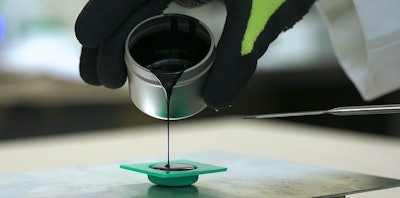
A new asphalt binder testing method coming out of Texas — dubbed the “poker chip” method — has gotten the seal of approval from the American Association of State Highway and Transportation Officials.
Developed by a team including Zahra SotoodehNia, an engineer with the Texas Department of Transportation’s Materials and Tests Division, the new procedure sandwiches a binder sample the size of a poker chip between two plates and then pulls it apart until it cracks or fails. In development since 2016, the method aims to model the stress asphalt is subjected to on roads and how it cracks under those conditions.
AASHTO has adopted the poker chip method as a provisional standard test method in the U.S., meaning it can be used early in the research or development phase. TxDOT says it plans to specify the test in 2027 and use it for checking binders before and after they are shipped to roadbuilding projects.
SotoodehNia, who worked on the project as a researcher in its implementation stage, says current testing methods were developed over 30 years ago and “simply don’t account for the wide range of modifiers used in today’s asphalt binders. The poker chip test is highly sensitive to both the type and quality of these modifiers. That means it can better predict how long a pavement will last and how well it will resist cracking over time.”
 Powered by
The poker chip testing method will ideally help researchers improve the quality of binder used on roads, resulting in asphalt that lasts longer and is less expensive to maintain, according to TxDOT.