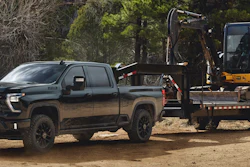












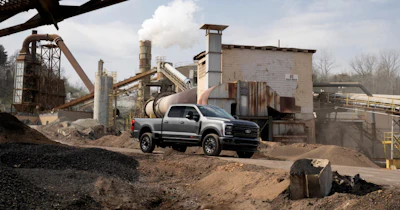
Ford revealed plans to refresh its F-Series full-sized pickup trucks, with the next-generation F-150 and Super Duty models set to hit the market by 2029.
The F Series, which includes the F-150 and Super Duty models, secured its 49th consecutive year as America’s best-selling truck in 2025, with 828,832 trucks sold — an increase of 8.3%. The F-150 received its last full redesign in 2021, with a mid-cycle refresh in 2024. The Super Duty was last redesigned in 2023.
The announcements came alongside the launch of a new Product Creation and Industrialization team, designed to deliver “on of the most intensive product, software and services rollouts in Ford’s history.” The new group, which integrates Ford’s Electric Vehicle, Digital and Design team with its global Industrial System, will lead the refresh of 80% of Ford’s North American portfolio by volume and 70% of its global portfolio by volume by 2029.
“This is the culmination of years of work and progress to create the modern Ford — a talented, unified organization capable of scaling high-quality, software-defined vehicles with a choice of propulsion, distinctive digital experiences and features, and a personalized ownership experience that improves over time,” said Jim Farley, Ford president and CEO.
 Powered by
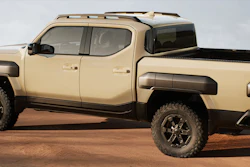
Along with the F Series, Ford also announced the launch of a new midsized truck and its first vehicle on the Universal Electric Vehicle (UEV) platform.
The Ranger, which sits between the Maverick and the F-150 in Ford’s lineup was last redesigned in 2024 and could be the new midsized truck the company was hinting at. The Ranger recorded an annual sales increase of 53.6% in 2025, with 70,960 pickups sold. The Ford Maverick also achieved record sales last year with 155,051 pickups sold, marking increasing demand for more affordably priced truck models.
While no additional information on performance specs or design upgrades to the F-Series or mid-size truck platforms, the news comes on the heels of several other manufacturers announcing impending next-generation models, including the Chevy Silverado by 2027.


The UEV platform will be the basis for significant changes across Ford’s lineup with the manufacturer calling it “a step-change in efficiency, affordability and digital experiences.”
Ford already teased its first UEV model last year — a new midsized electric pickup model with a starting price of about $30,000. The EV will be assembled in Louisville, with a targeted customer delivery of 2027.
The UEV platform features an ultra-efficient powertrain and a fully zonal architecture with in-house software controls and ADAS that supports a wide range of vehicle types and battery chemistries. Its design uses “unicastings” to reduce weight and complexity, enabling a new, more efficient and cost-effective assembly process.
By 2030, Ford says 90% of its vehicles by volume will be offered with an electrified powertrains option, which could include advanced hybrids, extended-range vehicles and fully electric vehicles. The UEV platform has already yielded new high-efficiency motors that will improve future hybrids, and established the Lithium Iron Phosphate (LFP) battery engineering capability that now serves as the foundation for its stationary energy storage business, Ford Energy.
In addition, updated electrical architectures, in-house developed user experiences and hardware and next-generation over-the-air capabilities will also further enhance the driver experience and enable the rapid rollout of BlueCruise and the Ford Digital Experience, which will help Ford scale toward future Level 3 autonomous driving.