










There's no shortage of cutting-edge technology for contractors to consider adding to their fleet in 2026.
With companies like Bluelight Machines offering retrofit autonomy kits, manufacturers like Caterpillar putting AI assistants into cabs, and more electric machines appearing on the market every day, it can be difficult to cut through the noise and find tech that can make a difference on the jobsite.
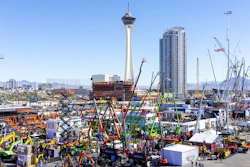
At this year's ConExpo show in Las Vegas, Equipment World editors were on the show floor searching for answers to that question: How can contractors determine which tech will not only work for them but deliver a solid return on investment?
In this episode of Iron Insider — an all-new video series in which we break down the data-backed trends shaping the construction industry and fleets of the future — Joel Honeyman, vice president of global innovations at Bobcat Co., sat down with us to discuss that question and give his no-nonsense take on how all this new technology can actually benefit contractors.
Chief Editor Jordanne Waldschmidt then breaks down this month's Data Download, a new segment where Equipment World editors examine the latest equipment finance data from Fusable's EDA and highlight key trends.
 Powered by
In this episode, Waldschmidt homes in on mini excavator and compact utility loader data following recent debuts from Kioti and Caterpillar at ConExpo 2026.
Subscribe to our YouTube channel for new episodes every five weeks.
Equipment World serves up weekly videos on the latest in construction equipment, work trucks and pickup trucks — everything contractors need to get their work done. Subscribe and visit us at equipmentworld.com!
In This Video:
- 00:00 - Construction Tech Trends vs Real Contractor ROI
- 01:16 - Bobcat RogueX3
- 01:55 - Do You Need New Tech?
- 03:15 - ROI for New Construction Tech
- 04:28 - What Tech Should You Start With?
- 05:12 - Keeping Dealers up to Speed
- 05:56 - Challenges and Opportunities for New Construction Tech
- 07:46 - Final Thoughts
- 08:09 - Data Download: Cat TUL100 Compact Utility Loader
- 09:30 - Data Download: Kioti MX Series Mini Excavators
About Fusable’s EDA Equipment Finance Data
EDA’s data is compiled from state UCC-1 filings on new and used financed construction equipment sales. Depending on machine type, financed machines represent 40% to 75% of the total number of equipment of that type sold in the United States. All figures include sales, lease and rental. EDA continually updates this data as information comes in from each state. As such, these numbers may have fluctuated since this data was pulled in late March. Equipment World and EDA are owned by Fusable.
00;00;00;28 - 00;00;13;17
Ben Thorpe
There's a constant stream of new technology hitting the construction industry every day. Innovations like artificial intelligence, automation and electrification aren't just concepts anymore. They're moving dirt on job sites as we speak.
00;00;13;19 - 00;00;19;01
Joel Honeyman
We're pushing the envelope for electrification, autonomy and connectivity.
00;00;19;03 - 00;00;26;27
Ben Thorpe
But so much exciting innovation happening at once. It's easy to get distracted from what really matters. Productivity, uptime and return on investment.
00;00;26;29 - 00;00;31;05
Joel Honeyman
If it doesn't work for the contractor, they're not going to like it and they're not going to use it.
00;00;31;10 - 00;00;38;04
Ben Thorpe
And instead of asking what's new? More contractors are starting to ask a tougher question what will actually improve my business?
00;00;38;08 - 00;00;48;17
Joel Honeyman
These solutions need to be simple. It's got to work and be reliable every time. And I think once contractors experience that, they can get past maybe some of the concerns that they've had about new tech.
00;00;48;18 - 00;01;06;05
Ben Thorpe
I'm Ben Thorpe, senior editor at Equipment World, and you're watching The Iron Insider here to help answer the question of where equipment innovation is headed and what it truly means for contractors. Is Joel Honeymoon, vice president of global innovation at Bobcat Company. Why don't you tell the viewers a little bit about yourself and what you do?
00;01;06;06 - 00;01;15;22
Joel Honeyman
Well, I'm the vice president, global innovation for Doosan Bobcat and been with the company going on 29 years. And as we were just talking, this is my 10th expo. I've been here a long time.
00;01;15;27 - 00;01;33;29
Ben Thorpe
So today we're talking about where the market for innovation is going, how contractors should approach new technology and what they can do to stay competitive. And we have a great introduction to that topic right here behind us, the X3. So why don't we just start with that segway. What's so exciting about this machine and what does it have to offer contractors?
00;01;34;02 - 00;01;54;05
Joel Honeyman
Well, the X3 is a concept vehicle that we're pushing the envelope for electrification, autonomy and connectivity. And so we're putting together all these future technologies to see what's possible, but it helps to inform us of which technologies we might bring down into our equipment lineups. And this machine really helps us to look at that.
00;01;54;12 - 00;02;13;25
Ben Thorpe
And we know contractors are interested in new technology like this, but we know people have concerns about things like cost, complexity. Managing downtime. So how should contractors evaluate whether or not a new machine or piece of technology is right for their job site and their company?
00;02;13;26 - 00;02;40;12
Joel Honeyman
Well, I'll tell you, they're right to be concerned because these solutions need to be simple, right? If it doesn't work for the contractor, they're not going to like it and they're not going to use it, and it's going to be it's going to be bad for the industry. And so we as manufacturers have taken that approach, especially us at bobcat is this is a building blocks is are blocks that you can add to the equipment, add to the experience that allow a customer to experience a new technology in a very simple way.
00;02;40;15 - 00;03;02;08
Joel Honeyman
One of the great examples that we have here at the show is our radar object in Collision warning System, and that allows us to detect objects, alert the operator or the first ones in the industry that will actually stop the machine, stop the loader from backing into those objects. Very simple system. You set it up once you're done and it works every time.
00;03;02;16 - 00;03;13;16
Joel Honeyman
And so that's an example of a technology. Again, it's got to work and be reliable every time. And I think once contractors experience that they can get past maybe some of the concerns that they've had about new tech.
00;03;13;23 - 00;03;39;28
Ben Thorpe
Right. That's a great example. Diving a little deeper into how contractors are going to think when they look at this new technology is a return on investment, and that can be simple or a complex thought. So when it comes to advanced equipment like what we have behind us here, how can contractors think differently about the concept of return on investment so they can see past just the price on the sticker, and they can think about things like labor efficiency or data insights and things like that.
00;03;39;29 - 00;03;59;28
Joel Honeyman
Yeah, I think and contractors are getting more sophisticated looking and thinking about these things because when we talk to them, especially when it comes to autonomy or automated types of functions, they know their cost to labor. They know the challenges they're facing hiring labor. So one of the vehicles that we've introduced in a previous show was a zero turn autonomous more.
00;04;00;02 - 00;04;27;22
Joel Honeyman
And so people understand the labor savings, for instance, that they get from that. And then like the collision warning and avoidance system I previously mentioned, they understand the damage potential on the side. They're calculating that in to understand whether there's a return for them to add that feature or not. So actually, I think contractors have gotten better at calculating and understanding that, knowing that these technologies are available and they have to have an ROI for them to make it work, right.
00;04;27;25 - 00;04;44;13
Ben Thorpe
Moving on to something a little different. So for contractors who want to futureproof their fleets, but, you know, they can't overhaul everything they have at once. What's a smart first step that you recommend for them is it's something like telematics or is it operator assist features? How should they prioritize what's available?
00;04;44;14 - 00;05;02;19
Joel Honeyman
Yeah, I think it's I think it's try I think there's ways for contractors to try some of this technology. And so I think asking your local dealer, no matter who it is and saying hey, I've seen this, I've read this, can I get a demonstration? Can I learn more? It's a way to cost effectively try it out. I would say see if it works for you.
00;05;02;20 - 00;05;12;13
Joel Honeyman
If it doesn't, that's fine, but it may work for someone else. And so I think just asking some of those simple questions of wherever your dealer is is a great way to start that out.
00;05;12;15 - 00;05;22;21
Ben Thorpe
That's actually an important element to this too. How do you coordinate with your dealers to make sure that everybody's prepared to show contractors why this technology valuable?
00;05;22;22 - 00;05;41;18
Joel Honeyman
Yeah, and that's a challenge for us as a manufacturers educating our dealer networks. But a number of the new technologies that we've put out in bobcat, we've done in in limited launches. So we're working with a select number of dealers, a select number of customers. And that's allowed us to tailor that support directly for them. And then we scale up from there.
00;05;41;20 - 00;05;55;12
Joel Honeyman
And so that's been very beneficial for us to learn because we need to learn to the questions that customers are going to have. What challenges and issues might they have to help us to help our dealer to support them better. And so it's worked out quite well for us, right.
00;05;55;15 - 00;06;20;27
Ben Thorpe
Moving on to it's kind of more of a forward thinking question because we know there's a lot of this technology hitting the market and it's not slowing down. More of it's coming. Looking ahead to the next couple of years, what are some of the challenges and opportunities you anticipate that not just bobcat, but all the manufacturers are going to face as more of this technology is coming to market and it has to continuously prove itself to be valuable on job sites, and that ROI needs to solidify.
00;06;20;28 - 00;06;24;21
Ben Thorpe
What are some of the challenges going to be, and what are some of the bright spots where you can shine?
00;06;24;23 - 00;06;44;11
Joel Honeyman
Yeah, I think, you know, one that we just talked about is it's us as manufacturers informing our dealer well enough so they can not only just sell it, but service and support it. So I'm a customer of new tech. I want to make sure that I have service and support for it. If there's a question or something takes place, I understand that and some of that might be direct internet support.
00;06;44;11 - 00;07;03;26
Joel Honeyman
It might be from the dealer, no matter where it is. So I think that is an important piece for our industry to think about. Is that first step. The other thing, it's got to be simple. Like if this isn't simple tech, if it doesn't work every time, if it's not reliable, people are not going to use it. And it will give the whole industry and the technology a bad name.
00;07;03;29 - 00;07;20;14
Joel Honeyman
And so I think those are probably our biggest challenges in there. But they're they're able to be overcome. And the other thing I would mention is is some of this tech isn't for everyone. And that's okay. We are there for the people who want simple hydraulic diesel machines at bobcat. We're going to build those for a really long time.
00;07;20;17 - 00;07;45;12
Joel Honeyman
However, my inbox gets filled up with other types of customers large fleet customers, other people, specific jobs and applications that want new technology. They're looking for this, and we're there for them too. So it's a both and world we like to say when it comes to this new tech. And I think for us at bobcat, allowing that to happen in the marketplace, letting the customer choose is the best way for us to address it.
00;07;45;17 - 00;07;55;14
Ben Thorpe
Okay. Well, is there anything else that contractors should be thinking about when they're looking at technology like this or something another manufacturer has and they're deciding if they should go for it or.
00;07;55;16 - 00;08;05;06
Joel Honeyman
Give it a try. Just try it. If it works for them, great. If it doesn't, that's fine too. But we'll never get there unless we work together on it.
00;08;05;08 - 00;08;11;08
Ben Thorpe
And now let's throw it over to Jordan to go over this month's data download.
00;08;11;10 - 00;08;30;26
Jordanne Waldschmidt
Thanks, Ben. The data download is all about the numbers behind the machines. And this month we're diving into two of the most surprising compact equipment launches at CarMax. Blow to size up the competition. We dug in to the latest equipment finance data from two usable EDA.
00;08;30;28 - 00;09;03;12
Jordanne Waldschmidt
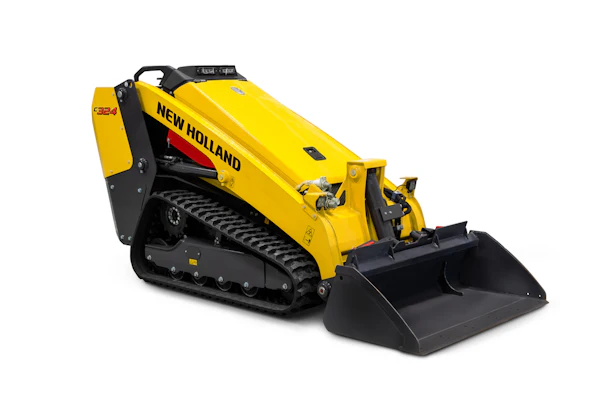
Caterpillar stunned with its entry into the compact utility loader market. The new tool 100 is set to make its commercial debut in 2027. It's a 3,600 pound machine with a 24 horsepower engine and 1,000 pound rated operating capacity. Now, here's what they're up against. Stand on many track loaders were the fifth most popular product category in 2025, with nearly 11,000 new finance units sold, up 1.9% from the previous year.
00;09;03;15 - 00;09;29;15
Jordanne Waldschmidt
Bobcat led the pack, accounting for more than 4000 of those units, followed by Kubota, Toro, Ditch, Switch and Vermeer. Given the number of low cost options in this segment, Cat will need to enter the market at the right price point to make a dent, but we think this cat designed and built model will benefit from its undercarriage and control commonalities with cat's compact track loader line.
00;09;29;17 - 00;09;57;29
Jordanne Waldschmidt
Coyote also surprised with its first ever mini excavators, marking the company's latest push into the construction space. The new Max series ranges from 3.5 to 5.7 tons and comes loaded with standard features, including an angled blade and thumb. Mini excavators for the second highest selling product category in the US last year, with more than 33,000 new finance units sold.
00;09;58;01 - 00;10;32;18
Jordanne Waldschmidt
That's down about 5% from 2024, but still a massive competitive space. The top selling new minis in 2025 were the John Deere 35 P-tier Cat 305 CR and the Kubota KX057-5. However, by total volume, Kubota held onto the top spot with more than 7600 units sold. How will Coyotes units fare against these established construction brands? We'll be tracking that closely and breaking it down in our next annual Mini Excavator Quick Data report.
00;10;32;24 - 00;10;51;18
Jordanne Waldschmidt
To stay up to date with the latest equipment sales trends and all things construction, head on over to equipment Worldcom. That's all for this month's data download. Special thanks. Goes out to Rocks Rental in Saint Germain, Wisconsin. We hope this helps you and your business. We'll see you next time.