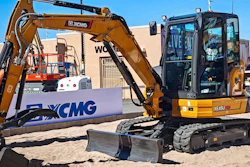











Bobcat’s new in-cab AI system allows operators to simply push a button on the joystick, speak a command or question, and the machine responds — all without moving their hands.
“Pretty much anything that you could do with moving your hands, the buttons, or onto the display, you can do now just by holding the one button on the joystick and talking,” says Chad Swenson, Bobcat embedded software engineer.
Swenson walked Equipment World through a demonstration of Bobcat’s new AI-powered Jobsite Companion at the CES show in January. You can watch that demo in the above video.
During the demonstration, Swenson used a joystick-mounted microphone button to issue voice commands to the system, including turning work lights on and off and displaying the backup camera.
The system is designed to allow operators to adjust machine settings and access key features without removing their hands from the controls.
“So we see benefits for inexperienced operators, experienced operators and kind of across the board,” Swenson says.
Swenson explained how Jobsite Companion can help operators configure machines for different attachments by guiding the operator to the right tool and best settings for it. The AI system can also assist with troubleshooting by responding to questions and guiding operators through adjustments, such as correcting steering drift.
 Powered by
Equipment World serves up weekly videos on the latest in construction equipment, work trucks and pickup trucks — everything contractors need to get their work done. Subscribe and visit us at equipmentworld.com!
00:00:00:00 - 00:00:16:04
Chad Swenson
So we have a new button on the joystick here. It's a microphone button. And you press and hold the talk. So the easiest example to show here and the show is hold the button, turn on the work lights.
00:00:16:06 - 00:00:45:09
Chad Swenson
And the work lights are off. Have been turned off. Turn off the work lights because now we're playing right. Show the backup camera this time. Okay. Displaying backup camera now. So, yeah, pretty much anything that you could do with moving your hands, the buttons or onto the this glow you can do now just by holding the one button on the joystick and touch.
00:00:45:11 - 00:01:07:27
Chad Swenson
So you're connecting an attachment, and maybe you're not really familiar with how you should set up the machine for that attachment. You can tell the system what you're attaching, and it will offer to, set the ideal configuration for that attachment. It will offer to do that for you automatically. Or maybe you're running into an issue. Maybe your machine is pulling just a little bit to the right.
00:01:08:00 - 00:01:32:05
Chad Swenson
And, maybe you're not aware of the feature, that it helps you adjust that you can, using natural language, talk to this system and say, my machine is pulling to the right, what do I do? And the system will respond, tell you about the features, steering drift compensation specifically, and it will help walk you through making those adjustments by voice.
00:01:32:07 - 00:01:54:03
Chad Swenson
So we see a lot of advantages for the inexperienced operators, but also for the experienced operators. So say you have an experienced operator that is moving from one side of the job site to the other, and they're changing tasks, and they want to adjust the response rates on the machine instead of stopping and taking off their gloves.
00:01:54:05 - 00:02:16:17
Chad Swenson
And, you know, digging three layers deep into the display to, change a setting. Now, while they're driving, they could push the button, tell it to make the settings changes and seamless. No stopping. Keep your hands on the controls and keep working. So we see benefits for inexperienced operators, experienced operators and kind of across the board.