











Editor’s Note: The article below is a condensed version of a longer interview, edited for clarity and length.
 Ivan Di Federico, President and CEO, Topcon Positioning SystemsTopcon Positioning Systems
He’s led everything from advanced automation research and development teams to strategic acquisitions and partnerships — experience that gives him a unique perspective on the next generation of construction technology.
His vision for the company centers on two things: simplicity and support. That means making machine control easier to install and calibrate, intuitive to use and more affordable, unlocking access for smaller machines like compact track loaders and mini excavators.
Equipment World sat down with Di Federico at ConExpo 2026 to discuss the evolution of machine control, why accurate data is imperative in the wake of AI and why interoperability between equipment brands is essential for mass adoption.
Looking ahead, Di Federico also forecasts where technology will see the biggest advances, how autonomy will change the role of the operator and what contractors can do now to prepare now for the jobsite of the future.
 Powered by
For more insights, check out the full Q&A below.
Equipment World: From your vantage point, where is machine control adoption at now, and where do you feel it needs to be in the next five years?
Di Federico:
Machine control is extremely important; it’s the basis of doing the job correctly. Where it should be is 100% adoption, but there are constraints related to cost, useability, availability of GPS and availability of training and information. There’s a long chain of things that need to happen in such a way that everyone can use this proficiently on the jobsite.
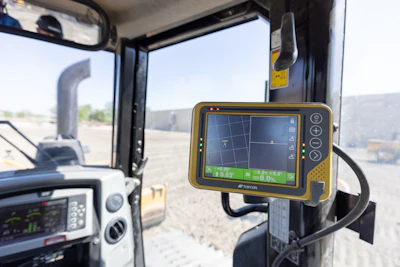
So, what we have been doing in the last few years is create a simple way to install, to calibrate, and essentially, make it available to a larger range of operators. This has required a lot of simplification in the user interface.


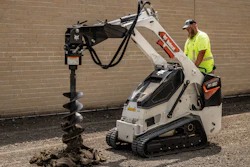
The results have been two-fold: more adoption on the large machine side and the availability of high-precision systems on small machines, like small excavators, compact track loaders and skid steer loaders. This generates now a much larger market.
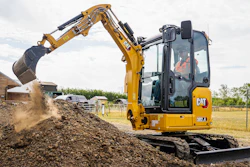
We believe that by further simplification of, let’s say, the way the maps are generated and transmitted. For the first time we can generate 3D maps on cell phone, this makes it very usable for small contractors to have access to this high-precision technology on a mini excavator, for example.
So, we have to expect a larger rate of adoption in terms of growth than we have seen in the past because we are addressing markets where this technology was not available before, was not simple enough or was not economical enough to adopt it. And at the same time, these new markets are much larger, 10 times bigger, than the big machine markets. We are very optimistic about it being the first ones in the market to have these new solutions.
EW: You’ve said that with the democratization of technology, users need to be very careful about bad data. Can you explain a little bit more what you mean by that?
Di Federico: This is related to the precision of what we do, because at the end of the day, this is not a video game. We need to match the precision, which was in the map, which was expected by the design, into real world. So, there's a responsibility attached to it.
Democratization of technology means that it's available to everyone. The technology of GPS has become mainstream and it's available to everyone, but what really matters is the end result. And we care about that. So, we make absolutely sure when we launch a new product or we support our existing products that the core piece of XYZT, these four numbers, are always correct when we deliver the result to the customer.
This is also important in the future because more and more AI agents are going to be used to automate functions in complex jobsites. If those AI agents are fed with the wrong data, then the consequences can be exponentially worse than today. For example, today is just about rework. Then in the future, because that set of data is driving also how we invoice or how we call for people or we call for trucks coming. It's all automatic. It's all in the chain. You create much larger damage if the first data is wrong. Therefore, we look at that because getting the data right is still not simple, and that's where we put our attention.
We are going to this migration from RTK accuracy, which is essentially one inch to one millimeter. When you have the millimeter under control in a simple way, then our job is really accomplished to make every single jobsite utmostly precise. That’s where we want to go in a simple way. So, that essentially is our journey into the future, but it's always on the side of our customer to guarantee that this work is precisely what the design asks for.
EW: Most contractors have mixed fleets. Can you talk a little bit about Topcon’s interoperability between equipment brands?
Di Federico:
Mixed fleet has always been our mainstream. We are not attached to any particular OEM, even though we serve more than 400 OEMs in the world. Our products are inside their vehicles in multiple functions.
As we expand the business, business can scale if there are clear standards of interoperability. Otherwise, the business remains as a niche and maybe one brand or another brand wants to dominate that niche, but the niche remains small. If we want to extend, as we said, to 100% market adoption, we have to have stronger standards. Such a way that the core set of data that are needed to move from one vehicle to another, for example, the same information as to what the first vehicle has done such that the second one can start from where the first one left precisely and so forth. That needs to be standardized.
Today, there are many more efforts than in the past. I can see a lot of attention in RTCM and other committees to create these standards, and I can see most of the OEMs converging into this area. This is extremely good for the industry because the more standards, the better level of adoption we will have and the less complication for the users.
So, I'm all for it and participating in these committees to make it available to everyone.
EW: Looking five years down the road, what do you see as the next big technology leap for the industry? And what should contractors be doing now to prepare for that?
Di Federico: The impact of software technology is going to be much larger than in the past. Why is that? Because again, the availability of good data sets enables artificial intelligence. And on top of that, also enables new features that today we don't have because we are concentrating on the vehicle. We should be concentrating on the vehicle and the terrain and all these types of things will happen.
What I'm expecting is large investments into making the vehicles more and more autonomous, and the fleet of vehicles more autonomous in such a way that by the design, the vehicles can study the design, organize themselves and complete the job safely and on time and on target. This requires some other work to be done by us in the industry, but it's not that far.
Change will happen, especially for the workflows and the way the contractors organize in terms of knowledge, in terms of utilizing this data for delivering better jobs and in more economical ways in order to finish, because there will be less rework. We can do a lot more prefabrication of things when things are precise at millimeter level. The world in the future looks easier to build construction works and infrastructure works as this technology get deployed.
At the same time, there's a lot to be done in terms of employment for people because this requires a new industrial chain to be developed. Autonomy doesn’t mean that we continue to do things in the same way, just with an autonomous vehicle. To harvest the most of it, we have to change the ways we do things at the same time.
There's plenty of work and plenty of opportunities to develop the industry because this prefab side has not been developed at all. And so, these two things need to come together. That’s how the construction industry, in my opinion, will develop in the next 10 to 20 years.
EW: Anything else contractors should know about Topcon and where the company is headed?
Di Federico: Topcon is committed and will stay committed to delivering very reliable precision data, and at the same time, bring that innovation to you in the most simple way and stand beside you when it comes to training, to understanding the new features and help and enable all the operators to use them best. This is our commitment to the industry.