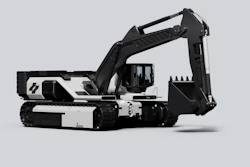













You might think a NASA project would involve highly technical and complex parts and procedures.
But a recent endeavor by the space agency to make bulldozers operated by firefighters safer near flames consists only of stuff you can buy at the hardware store, and it’s all powered by plain, old AA batteries.
The new low-cost thermal sensors NASA created through a collaboration with the Alabama Forestry Commission are designed to alert fire dozer operators when the heat is getting too dangerous. It also collects data on what’s going on inside the cab during a fire for future safety improvements.
[To watch fire dozers equipped with the thermal sensors in action near flames, check out the videos at the end of this story.]
The sensors came about to solve a problem the Alabama Fire Commission faced as it switched to new fire dozers with “envirocabs.”
The enclosed, sealed cabs with heat and smoke protection are a far cry safer than open operator stations, but they make it more difficult for operators to gauge radiant-heat intensity when they’re fighting a fire by clearing vegetation and creating fire breaks. If the temperatures get too hot, it can cause the dozer’s electrical wiring to short or melt. That could leave an operator stranded too close to flames.
 Powered by
“It’s not so much about what’s going to burn the tractor up as what’s going to shut the tractor down,” explains Ethan Barrett, AFC fire analyst.
NASA was asked to come up with an in-cab warning system that didn’t cost much and would be simple to operate.
So the agency’s scientists did just that.
“We used commercial, off-the-shelf components to make this,” says Jennifer Fowler, science integration manager for the wildland fires program at NASA’s Langley Research Center in Hampton, Virginia. “The thermocouple that sits in the window to measure temperature, for example, is the same one used in an oven or a kiln.”
The thermocouple is attached to a simple LED light on the dozer’s dash in front of the operator.
“When the thermocouple senses an unsafe temperature, the LED starts blinking,” according to NASA. “The whole system is powered by AA batteries.”


The system is so low-tech that when they were installing a second sensor and realized they needed an extra piece, they found it during a quick trip to a local hardware store.
 NASA's low-tech thermal sensor systemNASA/Milan Loiacono
The sensors were first installed in September on Alabama Fire Commission dozers with more added in March. The trial period proved successful.
“Since their installation, we have run them on wildfires and prescribed burns and they’ve been effective,” Barrett said. “They work exactly as intended, and the operators have said it leads to better situational awareness. Based on the success of this pilot, we are looking at outfitting all the dozers in our fleet.”
NASA and AFC plan to continue to collaborate on other ways to make fire dozer operators safer.
They will install a Fire Thermal InfraRed Spectrometer, or FireTIRS, on dozers to measure temperature, spread rate, flame length, fire convection and gas emissions.
They also plan to add anemometers and compact cameras. The anemometers would provide data on wind speed and direction, while the compact cameras would provide data on burn severity, rate of spread, and the type, volume and consumption of fuels, according to NASA.
All that data can mean advanced notice of what the fire will do, Fowler says.
“On a wildfire, that extra time is everything.”
Watch the NASA Sensor in Action
In the video below, Alabama Forestry Commission wildland firefighter Jason Berry shows what it's like to be in the cab of a fire dozer on the front line of a fire, and how the new thermal sensor system works to alert an operator when the radiant heat has reached an unsafe temperature.
In the video below, the Alabama Forestry Commission tests the new thermal sensor developed by NASA’s FireSense project for their fleet of fire dozers in September. After FireSense scientists installed the low-tech, low-cost sensor, AFC operators drove the dozer next to a test fire at the distance the dozers normally operate on a fire line.