











The North Carolina Department of Transportation recently deployed the largest amount of lightweight cellular concrete in its history for building a future interstate.
The lightweight cellular concrete was used on a project in Craven County to improve U.S. 70 between Raleigh and Morehead City for the future I-42. The highway is being elevated over five intersections.
Crews faced subpar soil conditions, making traditional fill materials unsuitable for elevating the highway, according to an NCDOT press release.
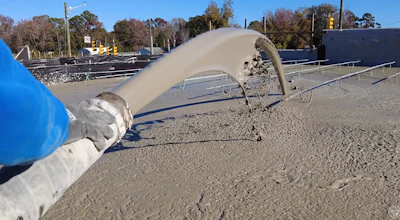
Consisting of cement, water and a foaming agent, the cellular concrete could be mixed on site, which reduced the required number of truckloads by about 20,000. That helped to prevent additional congestion through the corridor, the agency said, and allowed work to continue over the existing highway's path.
“We were going to have such a degree of settlement that it was going to be hard to overcome,” said Deputy Division 2 Engineer Cadmus Capehart. "In some situations, we were looking at almost 20 inches of settlement once we loaded the section."
NCDOT Resident Engineer Wendi Johnson said the cellular concrete settled in one-third of the time of traditional fill.
“With a traditional fill material that the department would use, we would have 280 days just in settlement time," she said. "This lightweight cellular concrete that we’re using actually reduces the settlement to about 90 days.”
 Powered by
When completed, the $322 million design-build project is expected to improve traffic on 5.1 miles of U.S. 70, east of Thurman Road to the Neuse River Bridge in James City. It will also convert five intersections into interchanges by taking U.S. 70 over those crossroads and providing interstate-grade exit ramps. Balfour Betty was awarded the contract in 2019.
Two of the project’s five interchanges are under construction, and completion is scheduled for 2028. The new interchanges will lay the foundation for a future Interstate 42.