











After a construction worker who is a U.S. citizen was detained three times, a federal judge has placed a temporary block on immigration officers’ raids without a warrant on private construction sites in southern Alabama.
Along with the stay on warrantless entry on construction sites, Chief U.S. District Judge Jeffrey U. Beaverstock’s order September 21 also temporarily halts officers from detaining workers without reasonable suspicion of them being undocumented and from continuing to detain workers after they show evidence of citizenship or being in the country legally.
The order follows a federal class-action lawsuit filed September 30, 2025, by Leonardo Venegas of Baldwin County, Alabama, against the U.S. Department of Homeland Security, U.S. Immigration and Customs Enforcement, the FBI and other federal agencies involved in construction site raids in the state’s Gulf Coast area.
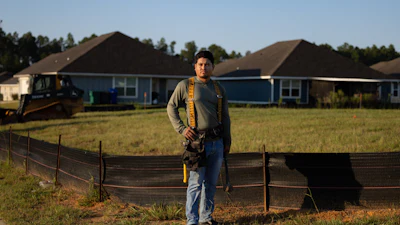
Venegas was born in Florida and was working May 21, 2025, and on June 12, 2025, on residential construction sites when he was detained in immigration raids, despite showing his Alabama Star ID driver’s license, which complies with the federal REAL ID law enforced by DHS.
The judge ruled that in both cases, Venegas’ Fourth Amendment rights against unreasonable searches and seizures were likely violated. He also rejected the federal government’s motion to dismiss Vanegas’ claims.
 Powered by
Following the filing of his lawsuit, Venegas was also stopped in his driveway in Robertsdale, Alabama, earlier this year after immigration officers followed him home. According to the nonprofit Institute of Justice, which is representing him in his lawsuit, Venegas tried to show his driver’s license but “was ripped from his car, tackled to the ground, handcuffed, shackled, and locked in the back of a car.”
The Mobile-based judge’s order addresses only the first two incidents of Venegas being detained and only covers the court’s jurisdiction in southern Alabama.
In a statement following the judge’s stay, Venegas responded:


“For the first time in a long time, I will be able to go to work without worrying that I will be arrested for no reason. Americans cannot be stopped and held by law enforcement when they are doing nothing wrong.”
Warrantless Raids
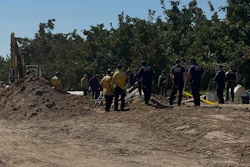
The first incident, on May 21, 2025, occurred in Foley where Venegas was on a concrete crew to lay the foundations of four homes in a new Lenmar development. The sites had No Trespassing signs posted and were surrounded by knee-high black fences.
Venegas saw five armed men, three of them masked, run past four non-Latino workers to Venegas’ crew, all of whom were Latino. While workers ran, Venegas and his brother stayed put. The officers grabbed Venegas’ brother and forced him to the ground.
Venegas took out his phone, started recording and walked closer.
An officer grabbed Venegas by the arm and started forcing him to the ground. Venegas yelled he was a citizen and could prove it. Two other officers also rushed in and helped hold him down.
One officer reached into Venegas’ pocket and pulled out his driver’s license. The officers told him his license was fake, handcuffed him, removed him from his worksite, and brought him to their unmarked car, where they held him for over an hour. He was later released without charges.
Then less than a month later, on June 12, Venegas was working alone inside a home in a D.R. Horton development in Fairhope. A federal officer walked in the house that was under construction and ordered Venegas outside, despite Venegas telling him he was a citizen.
Outside, he showed his license, but the officer said it could be fake. Two officers marched him about two blocks away to their unmarked car and lined him up with other detained Latino workers. After about 30 minutes, he was released and not charged with a crime.
The Judge’s Order
The immigration raids were orchestrated by the “Gulf of America Homeland Security Task Force,” composed of federal, state and local law enforcement agencies led by the U.S. Department of Homeland Security.
Beaverstock, a Trump appointee, issued a stay on three search-and-seizure policies Venegas accused DHS of implementing in the construction site raids:
- Warrantless Entry — raiding private construction sites without a warrant or consent.
- Preemptive Detention — preemptively detaining workers whom immigration officers think look undocumented.
- Continued Detention — continuing to detain workers even after they show evidence of citizenship or lawful presence.
DHS denied any knowledge of the three alleged policies.
“I am not aware of any Warrantless Entry Policy, Preemptive Detention Policy, or Continued Detention Policy used in my area of responsibility (AOR) as described by the Plaintiff,” declared Phillip Lavoie, acting assistant special agent in charge of the DHS office in Mobile.
He also said that “ICE’s policy requires officers to follow the Constitution and all relevant statutes and regulations” and that they “receive extensive training on Fourth Amendment searches and seizures in addition to their practical experience in the field.”
The federal government, in defending itself against the lawsuit, “likens a construction site to an open field where officers are always permitted to enter without a warrant,” the judge’s order states.
The judge said he was not persuaded by the government’s argument, and it undermines “specific considerations required by Fourth Amendment precedent.”
“As a result, the Court is satisfied that Venegas, an employee working at his place of work, has a reasonable expectation of privacy,” the judge wrote.
He adds that the government “offers no factual support whatsoever as to why officers reasonably believed Venegas ‘may be an alien.’
“… The Court is simply not inclined to take the Government’s word for it.”
In considering all three alleged policies, Beaverstock notes that the government denies the policies exist.
“It defies reason then,” he writes, “that enjoining those polices would ‘curtail’ anything.”
Venegas asked for a preliminary injunction on the policies or temporarily setting them aside.
“The Court has considered the implication of both remedies and determined the best course of action is to temporarily stay the policies,” the judge writes. “Although this Court has found that Venegas is likely to succeed on the merits, it also recognizes that ‘[a]n injunction is a drastic and extraordinary remedy.’”
What’s Next?
The judge’s order only covers the 13 counties of Alabama’s Southern District, but the Institute of Justice views it as a victory for construction workers.
“This decision is a huge blow to DHS’s lawless enforcement practices,” said Institute senior attorney Jared McClain. “The government stood up in court and argued that they don’t need warrants to enter private construction sites and round up all the workers, and that they can’t trust government-issued IDs. By setting aside those unconstitutional policies, the court has restored the rule of law. Construction workers like Leo can finally go to work in peace again.”
The order could also prompt construction companies facing ICE raids on their private sites to challenge the federal government.
“Though the holdings of this case are only applicable to the Southern District of Alabama, its reasoning may be persuasive for companies facing business disruptions due to ICE investigations,” write attorneys Mary Kate Fernandez and Trent Cotney in a blog on the Adams & Reese law firm’s website.
“Nevertheless, this decision offers a significant indication that the Fourth Amendment does not stop at the construction site gate.”
Meanwhile, Vanegas’ class-action suit continues to work its way through the court system.
It seeks a ruling that the search and seizures of Vanegas and the alleged government policies violated the Fourth Amendment and that it award nominal, compensatory and punitive damages, as well as reasonable attorneys’ fees, costs and expenses and any other legal or equitable relief the court deems proper.