











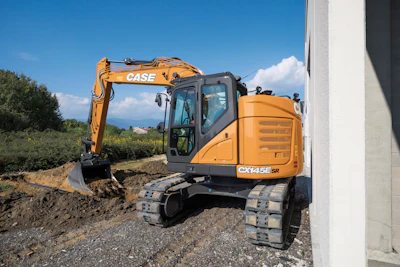
Case and New Holland parent company CNH is the next equipment manufacturer to announce plans to roll out software to lessen the impact on machinery when diesel exhaust fluid runs out.
Known as derate, diesel construction, farm and other off-road equipment, and trucks cut back on power when DEF tanks go empty or faults for selective catalytic reduction occur. Construction machines can go idle as soon as four hours after a detected fault.
John Deere was the first construction equipment manufacturer to announce plans to release software to enable its machines longer time before engines derate. Both Deere’s and CNH’s announcements follow voluntary guidelines released in September 2025 by the U.S. Environmental Protection Agency, calling on manufacturers to extend the time diesel trucks and equipment can run unhindered before derate.
CNH says its software rollout will begin in the fourth quarter this year and extend throughout 2027. The top priority is high-horsepower agricultural equipment, with other equipment following, the company says.
CNH did not release details of how its software will address derate other than it will align with the EPA guidance.
Under the new EPA guidance for off-road equipment, no reduction in torque would occur for the first 36 hours. Then there would be a 25% torque reduction. At 100 hours, torque would be cut in half.
 Powered by
In its announcement in August, Deere said its new software would give customers about 20 hours to address a DEF or fault issue before derate occurs. If not addressed in that time, instead of dropping to idle, the machine would decline to about 30% power.
After CNH’s software is released, customers will be able to install the update themselves with a CNH Electronic Service Tool subscription or via dealers who can help with update installations remotely or on site, the company says.
"Customers have been clear: they need solutions that help them stay productive, especially during seasonally critical windows," said Scott Harris, CNH North America president. "These updates are designed to give operators more practical flexibility in addressing emissions-system issues while supporting the performance and reliability they depend on across farms and jobsites."